Christmas, the Iranian-American Way: Old Traditions, New Lights’
By Kevin Busoni
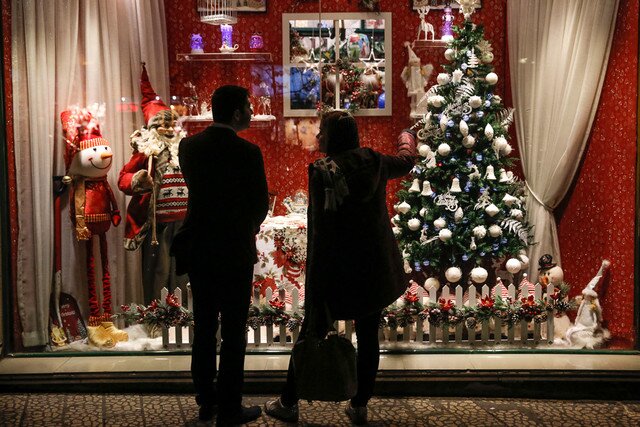
On a crisp December evening, the glow of Christmas lights spills from a townhouse in Northern Virginia. Inside, the scent of saffron rice mingles with cinnamon and pine. Somewhere between the Christmas tree and the sofreh laid out on the dining table, an Iranian-American family is doing what it has done for generations: blending cultures, stories, and traditions into something uniquely its own.
For many Iranian-Americans, Christmas is not a religious obligation but a cultural celebration—an adopted holiday that has become a joyful marker of belonging, community, and intergenerational connection. It’s a season of warmth and togetherness that resonates deeply with values long held in Iranian culture: hospitality, family, and celebration around the table.
“I grew up in a Muslim household where we didn’t celebrate Christmas in Iran,” says Laleh, a second-generation Iranian-American in the Washington, D.C. area. “But once we were here, it became a way to feel connected—to our neighbors, to our kids’ schools, and to the rhythm of life in America.”
That sense of cultural adaptation is something many Iranian-Americans recognize instantly—and often laugh about. In Funny Farsi, author Firoozeh Dumas captures these moments with humor and tenderness, recounting her family’s early encounters with American customs, including holiday traditions that were both puzzling and delightful. Her stories remind readers that assimilation is rarely a straight line; it’s more like a dance, filled with misunderstandings, curiosity, and unexpected joy.
Today, Iranian-American Christmas celebrations are as diverse as the community itself. In some homes, the holiday is marked simply with a decorated tree and a gift exchange. In others, it becomes a full fusion feast: turkey served alongside ghormeh sabzi, cranberry sauce sharing space with torshi, and baklava competing with sugar cookies for dessert supremacy.
Children often become the bridge between cultures. They bring home school songs about Santa Claus and reindeer, while grandparents contribute stories of Shab-e Yalda, the Persian celebration of light triumphing over darkness—an idea that feels perfectly aligned with the spirit of Christmas. It’s not uncommon to see families celebrating Yalda and Christmas within days of each other, weaving ancient Persian symbolism into modern American festivities.
For many Iranian-Americans, Christmas also offers a pause—a moment to reflect on the journey of immigration and identity. The holiday can carry layers of meaning: gratitude for safety and opportunity, nostalgia for a homeland left behind, and hope for the future generation growing up comfortably between two worlds.
Community plays a central role as well. Iranian-American organizations, cultural centers, and mixed-heritage families often host holiday gatherings that are intentionally inclusive. These events aren’t about doctrine; they’re about connection. Muslims, Jews, Christians, Zoroastrians, and the secularly inclined come together under twinkling lights, united by shared stories and a love of celebration.
There’s also something distinctly Iranian about embracing Christmas with creativity. Decorations might include a blend of Western ornaments and Persian motifs. Music playlists move seamlessly from Nat King Cole to Googoosh. And humor—always humor—fills the room, as family members joke about mispronounced carols or the eternal question of whether Santa would prefer chai or tea.
In many ways, Iranian-Americans celebrating Christmas reflects the broader immigrant experience in America: adopting, adapting, and reshaping traditions until they feel like home. It’s not about losing one identity for another, but about expanding what identity can be.
As the evening winds down and guests reach for one last cup of tea, the Christmas tree continues to glow quietly in the corner. It stands as a symbol—not just of a holiday borrowed, but of a life built between cultures, where stories are shared, laughter is abundant, and belonging is something lovingly created, one tradition at a time.